"There are insufficient data to develop informed judgments . . . For example although avian influenza, Newcastle disease, and salmonellosis have not been reported in Texas quails, there is no reason to assume that these agents would not cause significant mortality if epizootics occurred. (excerpted from M. J. Peterson's chapter "Diseases and Parasites of Texas Quails" [p. 113] in L. A. Brennan (ed) Texas Quails: Ecology and Management [2006]).
Most field reports of quail hunting I am receiving continue to range from 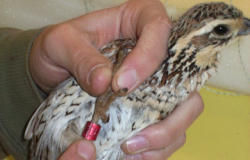 “disappointing” to “dismal.” Such reports are especially discouraging considering how good the habitat looks.
As discussed in the December issue of e-Quail, the Rolling Plains Quail Research Ranch has been submitting tracheal and cloacal swabs to research veterinarians at Texas A&M University from all quail trapped for leg-banding purposes during October and November. Last week I received word from Dr. Blanca Lupiani, an Associate Professor in the Department of Veterinary Pathobiology, that 5 of 114 submitted thus far tested positive for Avian Influenza. All five of the positives were from juvenile birds.
At this time, we are uncertain as to the significance of these findings, but they are intriguing. Additional samples have been submitted for analyses. Whether the current dearth of quail is a function of last year's dry fall, winter, and spring conditions, some mysterious disease, and/or other factors is unknown. Additional testing for two other viral diseases (Newcastle virus and infectious bronchitis virus), and several microparasitic diseases, will be conducted after the Christmas holidays. RPQRR's pledge is to leave no stone unturned-stay tuned for updates.
In the meantime, be alert to any quail you encounter (or bag) that appear lightweight, or are otherwise suspicious (e.g., weak flyers). Report such findings to me at 325-653-4576, or e-mail me at d-rollins@tamu.edu.